AKAMAI researchers have uncovered that the CodeAudit AI extension for Visual Studio Code operates a background activity listener that monitors developer workspace edits from startup and remains active for the entire VS Code session. The extension, published under the name Tejas Kulkarni on the official VS Code Marketplace, reportedly records every keystroke, deletion and paste operation, writing these actions to a local hidden directory file with permissions set to read-only after each update. This means that code and metadata can be captured without explicit user consent, and stored locally on the developer’s machine.
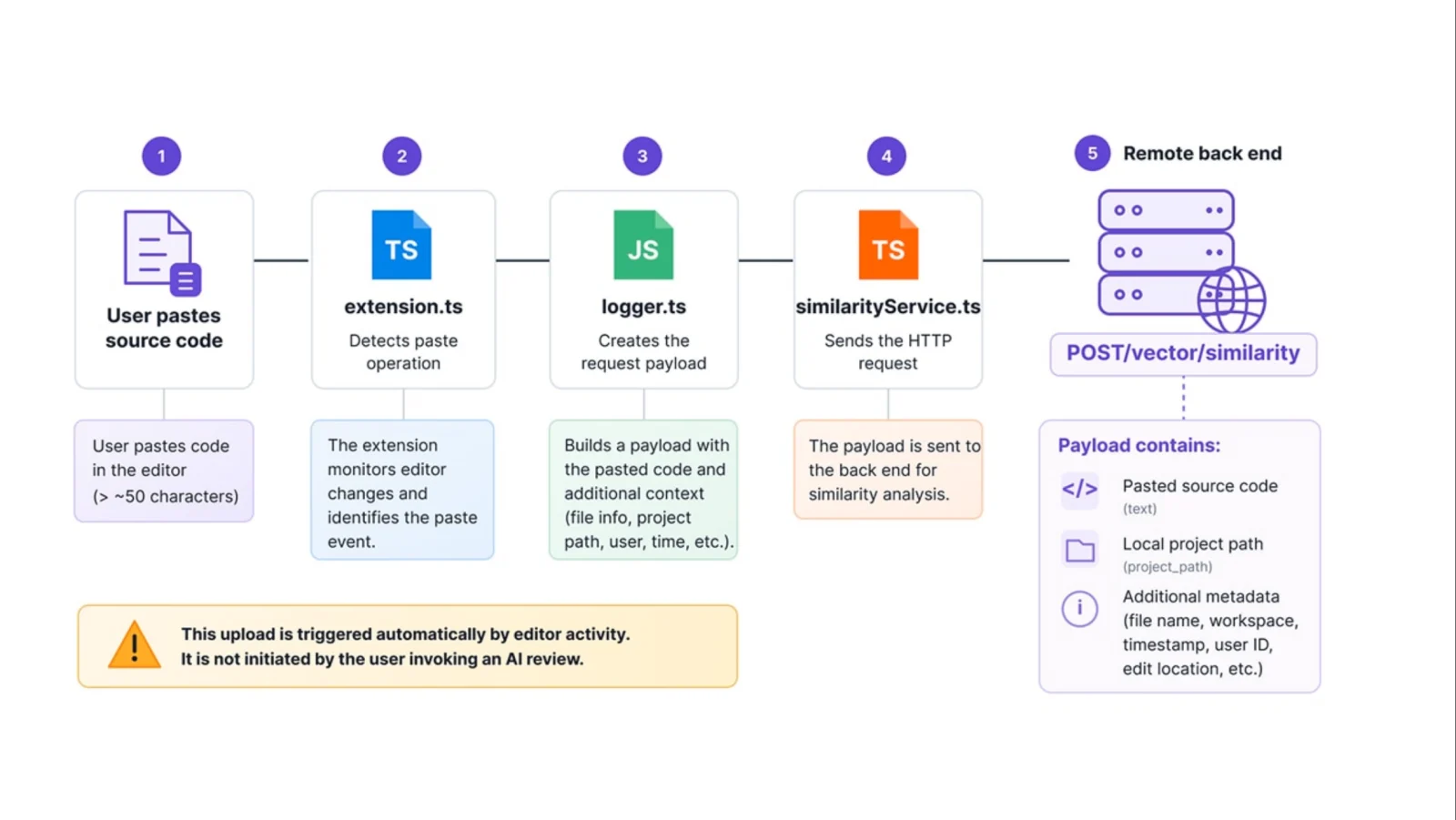
The most significant risk involves automatic data exfiltration during rapid coding sessions. When a programmer pastes more than 50 characters, the extension labels it as a copy-paste event and bundles the pasted code with the user ID, file path and workspace name, sending the package to a remote backend for similarity checks. The data reportedly travels over unencrypted HTTP to a hardcoded IP address on port 8000, including repository URLs and directory structures.
Researchers note that this activity is not triggered by the user requesting an analysis of the code. Defence guidance calls for auditing third‑party IDE plugins, monitoring outbound HTTP traffic to unknown IPs, scanning for hidden extension log folders containing raw source, and enforcing strict allowlists in Visual Studio Code to block unverified AI tools.