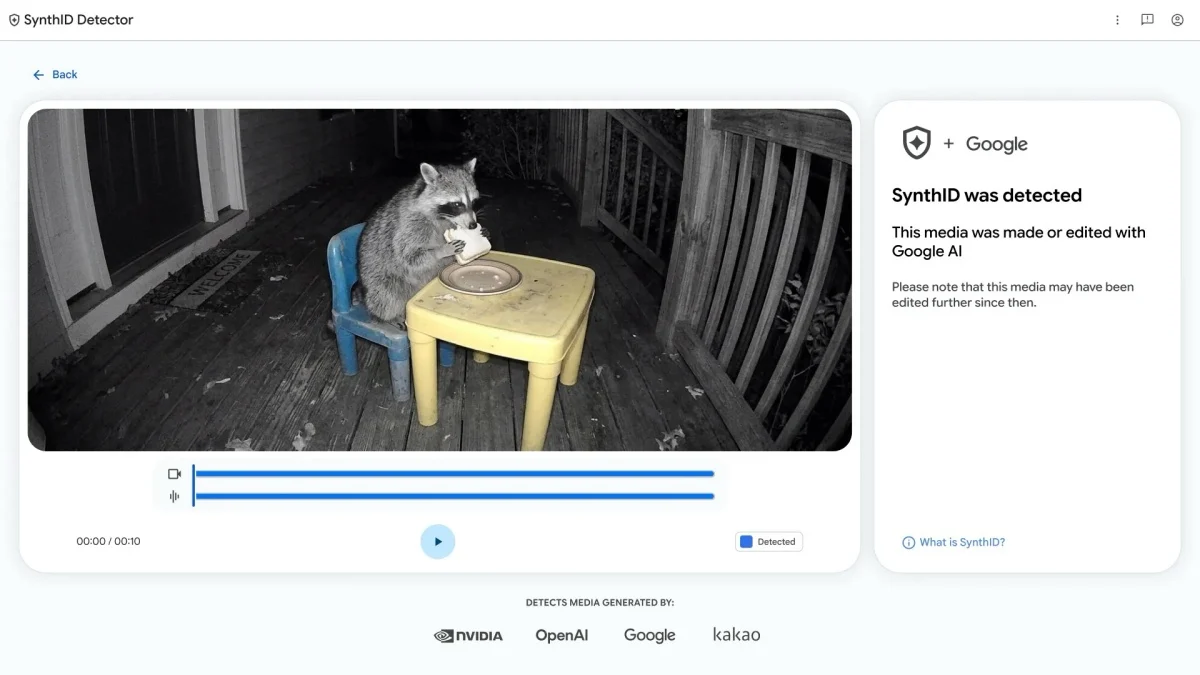
GOOGLE has opened its SynthID AI Detector to the public, following more than a year of restricted testing with journalists and media professionals. The web-based tool, accessible via synthid[.]com, lets users determine whether an image, video, or audio piece has been generated or manipulated by artificial intelligence. Access now requires authenticating with a Google, OpenAI, or Apple account, and the analysis is performed only after sign-in.
The detector is designed to identify content generated or altered by major AI engines, including Google Gemini, OpenAI, NVIDIA, and Kakao. Google describes SynthID as a defensive measure against AI-fabricated disinformation, while emphasising that it is not “absolutely bulletproof.” Key limitations noted include fragmented watermarking standards across companies, the difficulty in distinguishing full generation from subtle refinement, and the risk that watermarks can be removed through extreme editing.
Google also points to ongoing development and plans to broaden the ecosystem, with mentions of collaboration with partners such as ElevenLabs, which has signalled its intention to join the SynthID watermarking coalition.
Practically, users can access the public portal to test content themselves, but should recognise that detection is not definitive and should be considered one of several tools in assessing authenticity. The launch lowers barriers to public verification beyond Google’s own apps, enabling individuals outside the Google AI ecosystem to assess content authenticity and take precautions against potential misinformation.