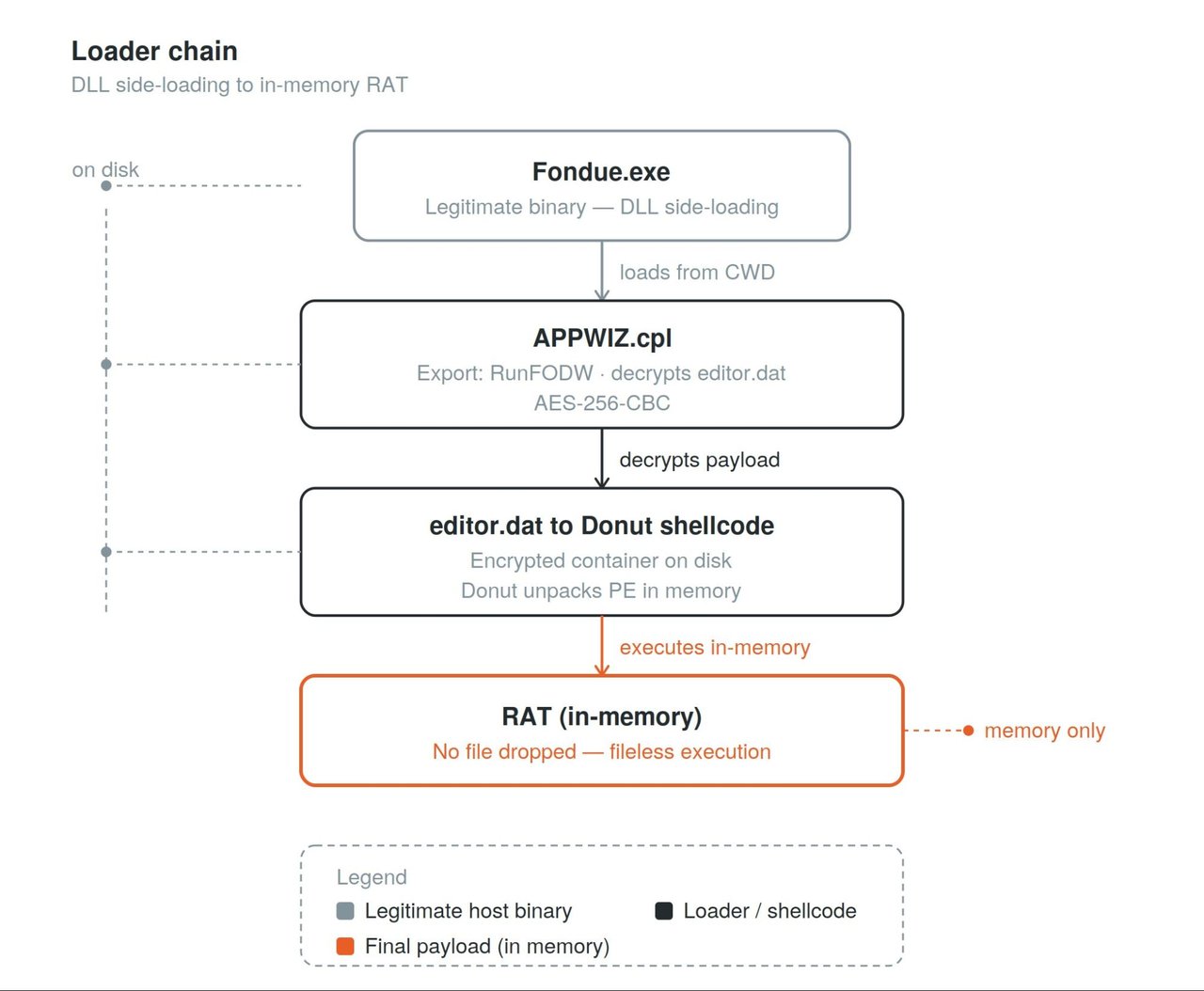
THE Dropping Elephant malware utilizes advanced fileless techniques to launch attacks on primarily Asian energy-sector entities. This campaign leverages a China-themed decoy document to deliver a remote access trojan (RAT) directly into system memory, bypassing traditional security measures. The attack vector involves malicious LNK shortcuts disguised as PDF documents, which execute obfuscated scripts that fetch additional malicious payloads while distracting the victim with a legitimate-looking decoy document.
The malware performs reconnaissance by gathering system details and securely communicates with a remote server, employing various tactics to avoid detection such as control-flow flattening and runtime API reconstruction. Defense strategies include monitoring for unusual script activities, anomalous network traffic, and implementing robust behavioral analysis to detect memory-resident threats.