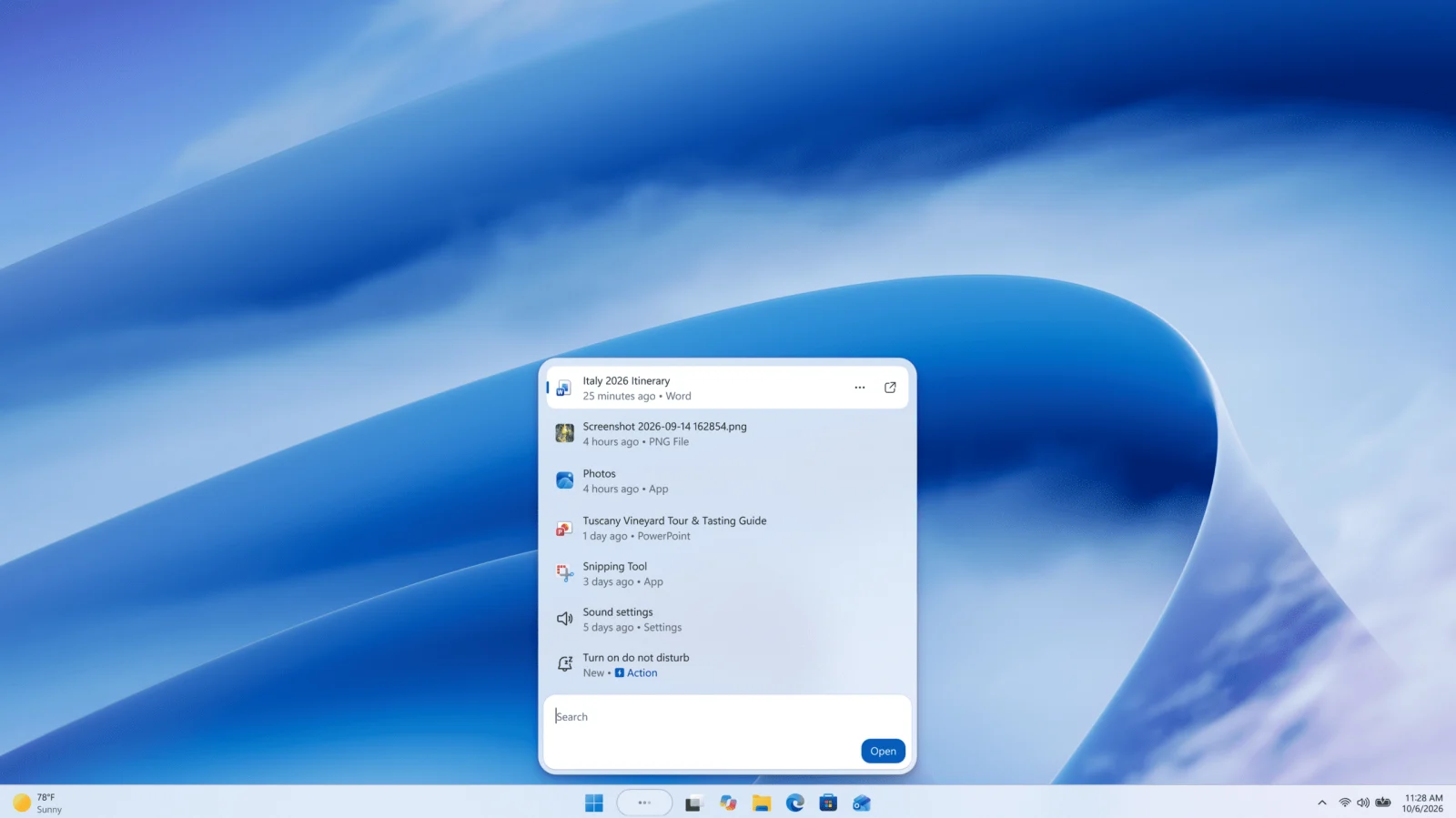
MICROSOFT has rolled out a substantial shift for Windows 11, unveiled at a recent Surface event, with the Search Menu and taskbar being reimagined as a context-aware AI assistant and central control hub. The company introduced “Hybrid Intelligence,” a new software orchestration framework that lets Windows run AI models locally while judiciously using cloud resources for large tasks. The aim is a seamless cloud-to-edge balance, with an emphasis on keeping sensitive operations on device.
Microsoft’s demonstration positioned Copilot as a core, integrated component rather than a standalone app, and highlighted security via new sandboxing technology, branded as Microsoft Execution Containers (MXC), to confine local AI agents within a protected environment. The features are slated for a phased rollout on Windows PCs over the coming months.
In practical terms, the search box is becoming a command line for the system. Users can type concise instructions to trigger operations across the OS—typing “increase microphone volume” brings up a volume slider, or a simple command toggles Dark Mode or Do Not Disturb. If a paired smartphone is present, text messages can be sent straight from the taskbar. Copilot can be accessed directly through the search interface, reducing the need to launch a separate app.
The vision, as described, is an intent-driven UI that understands human goals rather than requiring navigation through settings. Autopilot, operating with data strictly on-device in this vision, can process local files end-to-end, while genuinely heavyweight tasks can be offloaded to the cloud, all in a system designed to address enterprise cybersecurity concerns through on-device processing and MXC isolation.