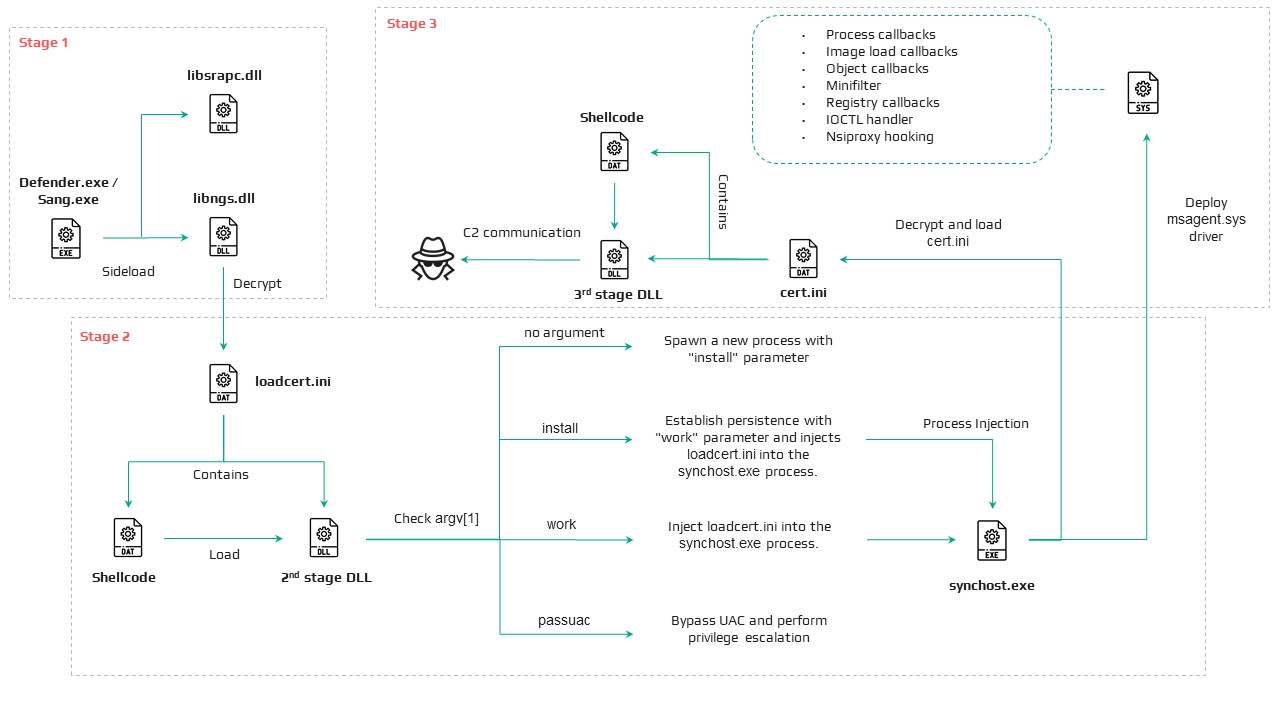
THE content discusses recent cybersecurity threats, specifically focusing on an updated variant of the HoneyMyte CoolClient rootkit, which targets government entities and organizations in Asia and Russia. Key points include:
1. **Threat Details:** The HoneyMyte group, known for cyber-espionage, has refined the CoolClient rootkit to include a signed kernel-mode driver that enables stealthy installation and operation within infected systems.
2. **Attack Mechanism:** Attackers deploy this rootkit following an initial infection, using legitimate binaries to sideload malicious components, allowing them to avoid detection by standard security measures like Windows Defender.
3. **Malware Functionality:** The rootkit actively hides processes and network traffic from detection tools, complicating analysis and mitigation efforts. It also modifies Windows kernel structures directly to mask its presence.
4. **Victims and Scale:** Notable targets include government agencies in Myanmar, Mongolia, Pakistan, and Russia, with the malware capable of stealing sensitive information and facilitating prolonged surveillance.
5. **Defensive Measures:** Security teams are advised to monitor for changes in Windows Defender settings, inspect installed drivers, and block known malicious infrastructure to mitigate the risk of infection.