ANTHROPIC has announced a revamp of its Cyber Verification Program by introducing three access tiers for Claude Cyber, aligning the model’s cyber capabilities and safeguards to a user’s level of trust. The scheme replaces a simple on-off access model and is designed to allow security teams to select the level most appropriate for their work.
The tiers—Defense Access, Red Team Access, and Specialized Access—grant access to Claude Opus 5.5, Claude Sonnet 5.5, Claude Mythos 5.1, and future models, with varying review speeds: days for Defence, weeks for Red Team, and in-depth checks for Specialized. The changes consolidate two prior initiatives, Project Glasswing and the original CVP, into one structure.
Defense Access targets security operations, incident response, malware reverse engineering and vulnerability validation; Red Team is for organisations conducting authorised penetration testing with several real-time safeguards still in place; Specialized Access is for testing that could impact people or critical systems, with joint review by Anthropic and US government partners.
Evidence cited by Anthropic includes CyScenarioBench tests showing how Claude performs on simulated cyber operations. Without CVP access, tasks are blocked at the first prompt; in Red Team Access Claude Opus 5.5 completed 34 of 50 tasks, and in Specialized Access the model reached a similar completion rate to unguarded use. The Defence tier blocked 46 of 50 tasks, permitting four difficult ones.
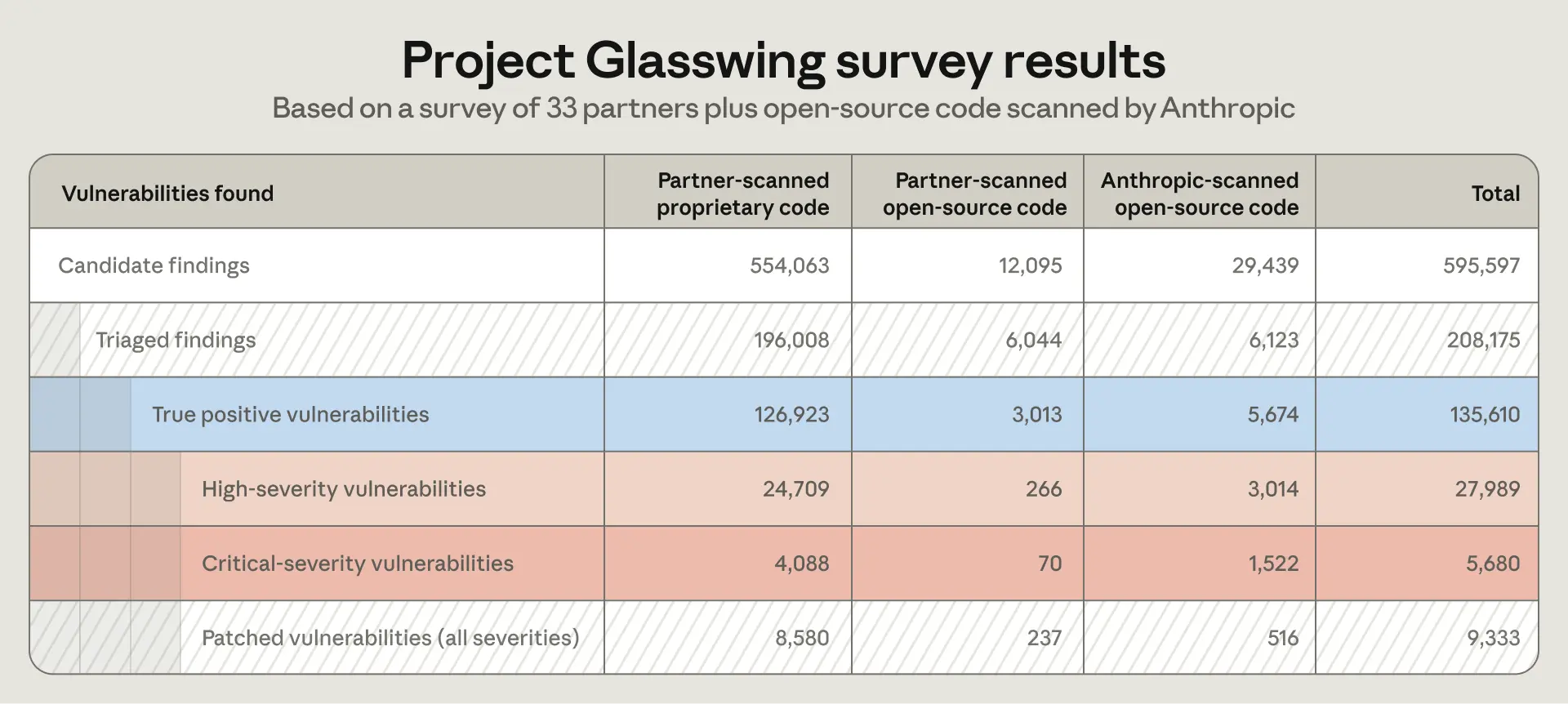
Anthropic also notes partner-derived data from Project Glasswing indicating at least 129,000 verified vulnerabilities found between April and July 2026, plus 5,500 more via open-source scanning through October 2026, with over 33,000 rated critical or high severity. The company calls this a meaningful shift in defender speed relative to attackers, while acknowledging figures are a conservative floor.