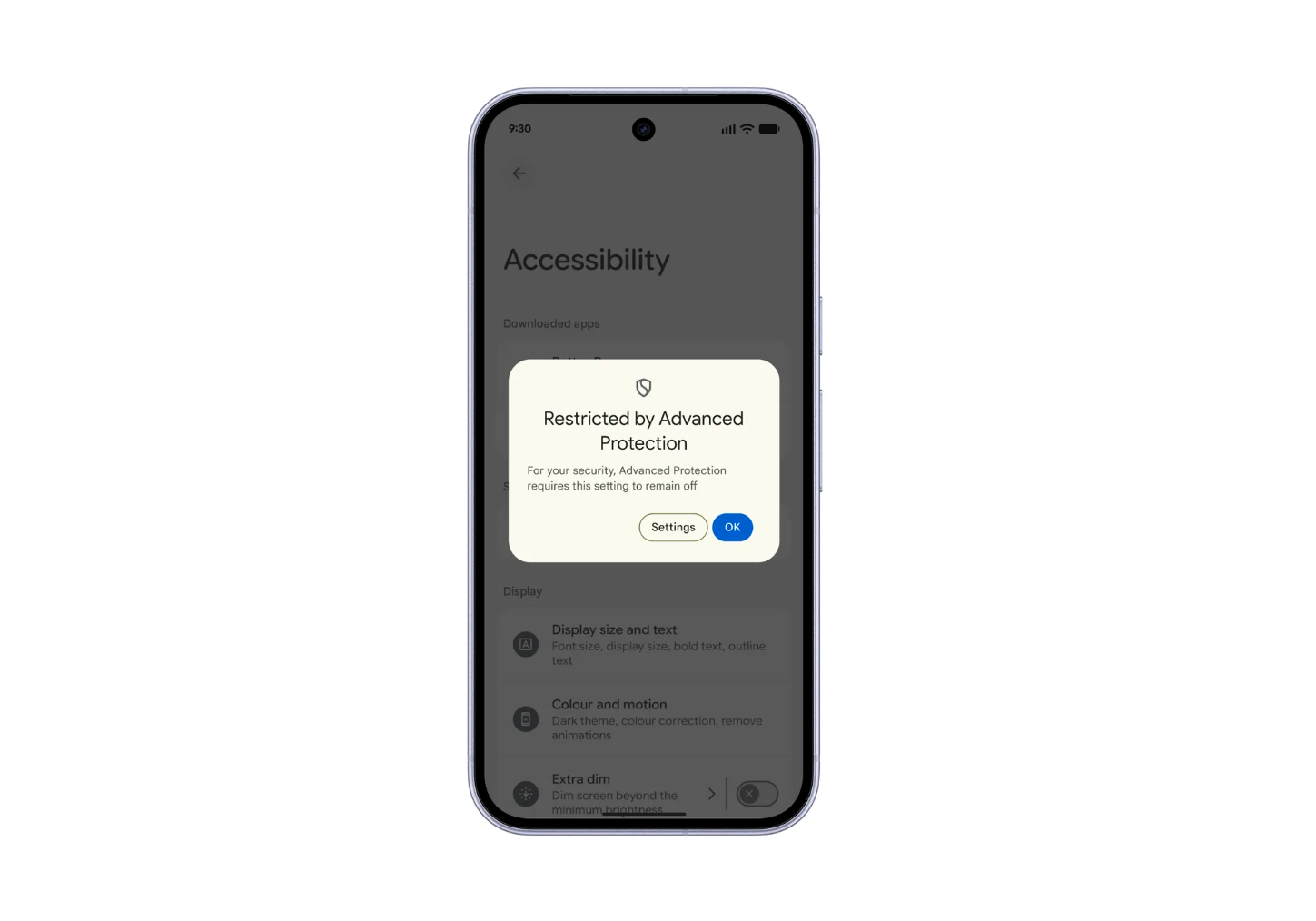
GOOGLE has significantly strengthened its Android Advanced Protection in a broad series of architectural changes. The core update introduces a singular, unified mode that tightens USB data transmission, blocks unauthorised access to accessibility features, disables WebGPU within Chrome, and securely archives security logs for up to a year.
The company describes Intrusion Logging as a comprehensive mechanism that records critical security events and nuanced network activity, storing these logs in the cloud with end-to-end encryption for 12 months, such that only the legitimate device owner can access the archives.
Other notable protections address physical and application threats. A USB Protection feature prevents data transfer over new USB connections when the device is locked, allowing only charging through the physical cable in such circumstances, a measure aimed at thwarting “juice jacking” attacks at public charging points. Android 17 imposes strict limits on applications attempting to use the AccessibilityService; only verified apps designed to assist users with disabilities will obtain elevated access.
In the browser, Chrome under Advanced Protection disables WebGPU to reduce the attack surface, and there is a locked-down state following a sequence of failed biometric or cryptographic identity verification attempts. Google notes that most of these capabilities debuted with Android 17, though the actual availability depends on the device’s underlying hardware. The firm also directs readers to a Google publication detailing the new features for further technical context.