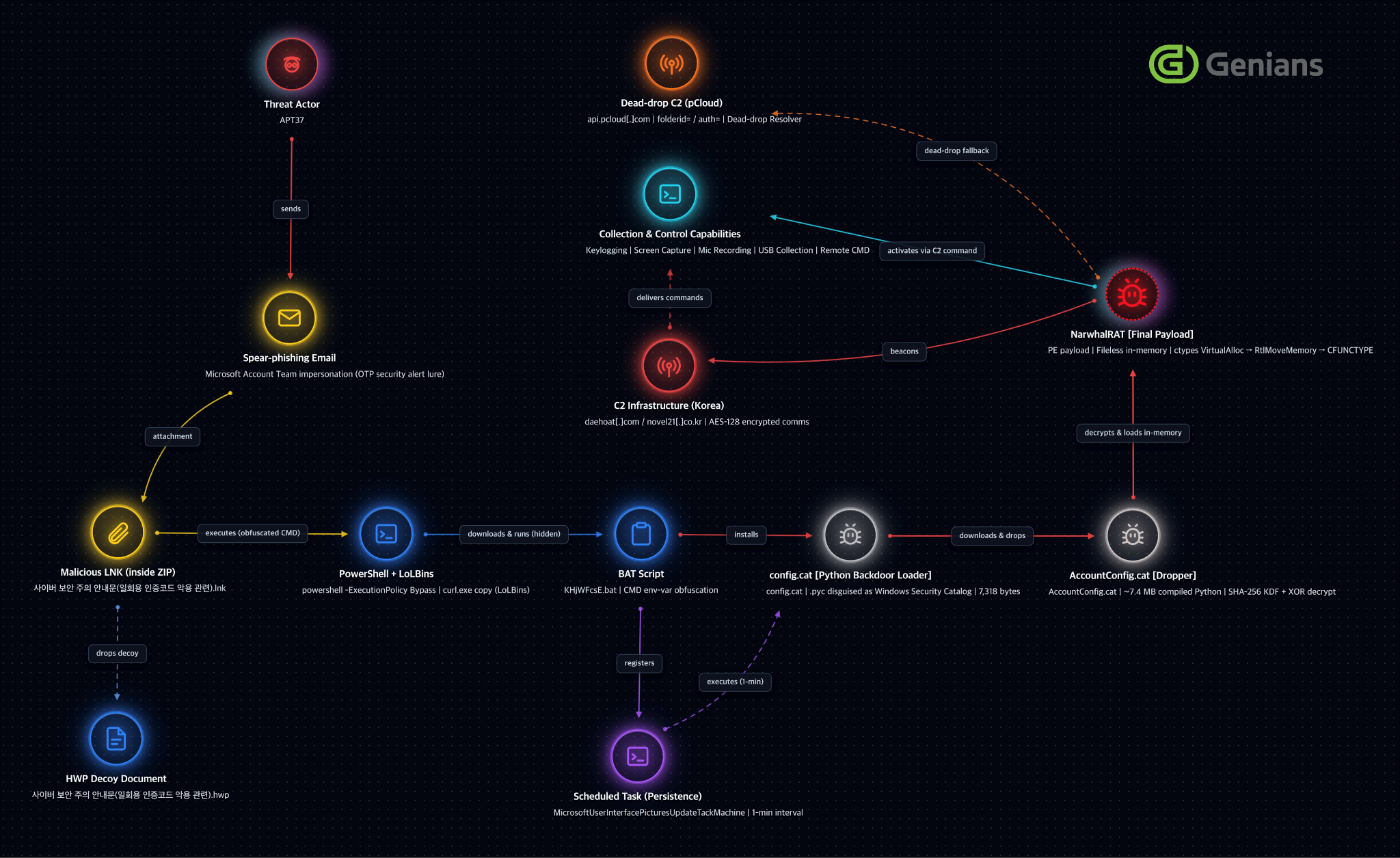
THE article discusses the APT37 NarwhalRAT malware, a sophisticated Python-based backdoor that targets Korean users via spear-phishing attacks. Attackers impersonate Microsoft in deceptive emails, prompting users to download malicious attachments. The infection occurs through a multi-stage process, including obfuscation tactics that avoid detection.
Key features of the malware include fileless execution, anti-virtual machine measures, and extensive data collection capabilities, such as keylogging and screen capturing. It establishes persistence on the victim's system and employs a dual command-and-control structure to blend its activity with legitimate cloud service traffic. The article emphasizes the need for organizations to strengthen cybersecurity defenses against such advanced threats.