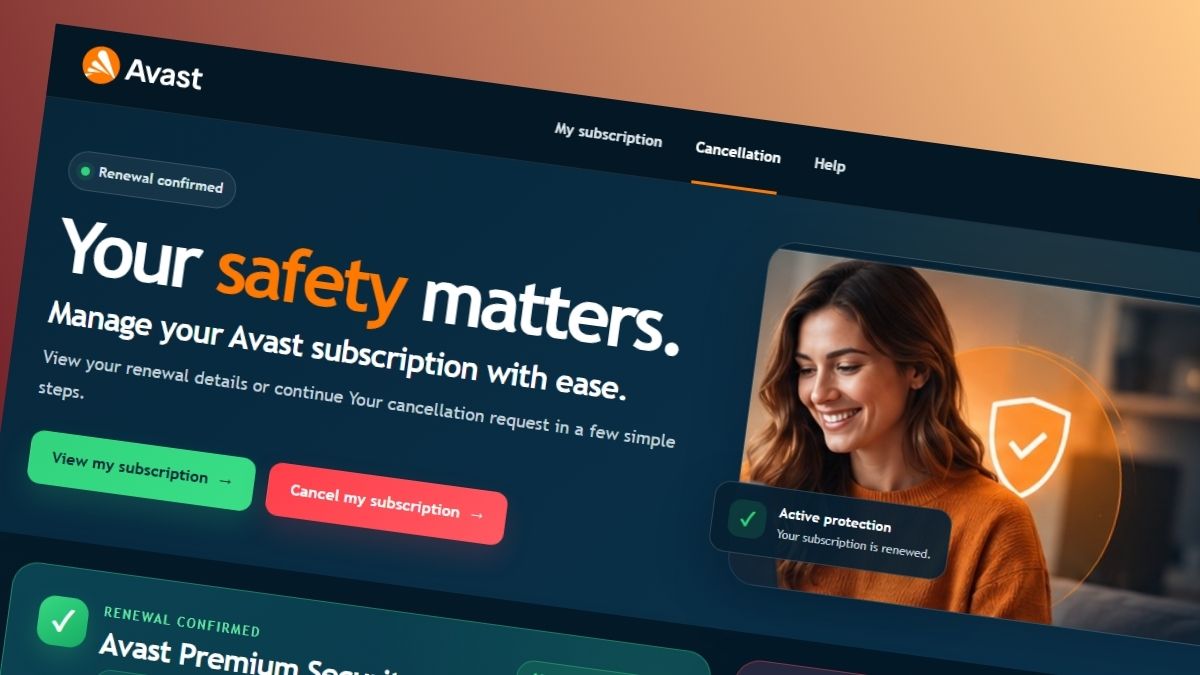
MALWAREBYTES says scammers are using polished, apparently AI-assisted webpages to support antivirus renewal scams. The messages claim a subscription has renewed and direct recipients to a cancellation page, even though no payment exists. The pages collect names, email addresses and phone numbers, giving criminals leads for follow-up calls in which they may pose as support staff, request remote-access software or claim to be reversing a non-existent payment.
During scam-hunting activity, Malwarebytes found a French-language site targeting users in Belgium and impersonating Avast. It falsely stated that an Avast Premium Security subscription covering five devices had renewed for €129.99 and would renew again the following February. The cancellation form requested a full name, email address and Belgian mobile number, but no password or card details.
Malwarebytes found notes in the source code suggesting the form had not been connected to a data destination, alongside unused styling and other unfinished elements. These clues were consistent with AI-generated work, although the company said AI involvement could not be proven from the files alone. The page may have been an incomplete template or awaiting sale to another scammer.
Malwarebytes advises checking bank or card statements and subscriptions through an organisation’s official app or website, rather than using message links. People who submit details should expect possible scam calls and must not install remote-access software at a caller’s request. Anyone who has installed such software should disconnect the device, remove it and change passwords from another device; those who shared card details or sent money should contact their bank immediately.