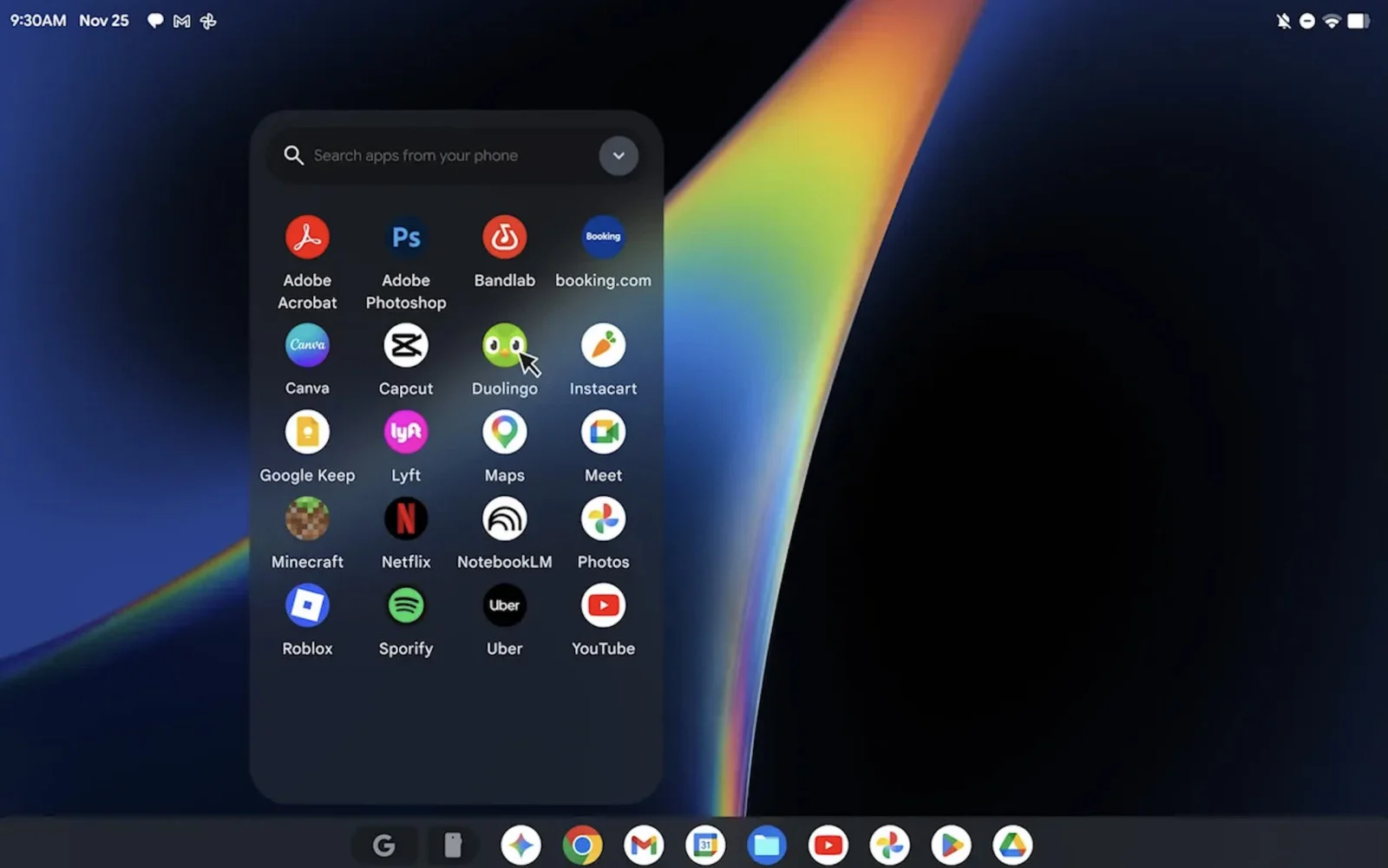
GOOGLE has unveiled Googlebook OS, a hybrid system merging ChromeOS and Android to offer a desktop-class Android experience, developed in collaboration with hardware manufacturers. The article notes the OS, previously codenamed Aluminium OS, is intended for use across Googlebook devices. A developer, Skylar Taylor-Barrick, is attempting to run this OS on a MacBook via QEMU virtualization, with early milestones including standard boot, GPU acceleration, and running the Google Chrome browser.
The GBOS-VM project on GitHub is the open-source home for this effort, which uses an official Dell recovery image as its foundation and substitutes virtual device components for the physical hardware.
The setup hinges on a graphics translation stack to bridge Vulkan used by Googlebook OS with macOS’s Metal. The GBOS-VM approach translates Vulkan calls to Metal through MoltenVK, aided by POSIX shared memory to mediate Android graphics buffers between OpenGL ES and Vulkan. The result is a visible system interface and a functioning Chrome browser, though some WebGL content may render imperfectly and the VM is capped at 60 frames per second.
Hardware completeness remains limited: it requires an Apple Silicon Mac, with recommendations of at least 16 GB of memory and 60 GB of free storage, plus development tools such as Xcode Command Line Tools, Homebrew, JDK, and the Android SDK/NDK. Bluetooth and audio are unstable, and overall functionality for peripherals is incomplete.
The article emphasises this is for developmental exploration rather than daily use, offering a pathway for verification and virtualization development rather than a ready-to-run Googlebook device.