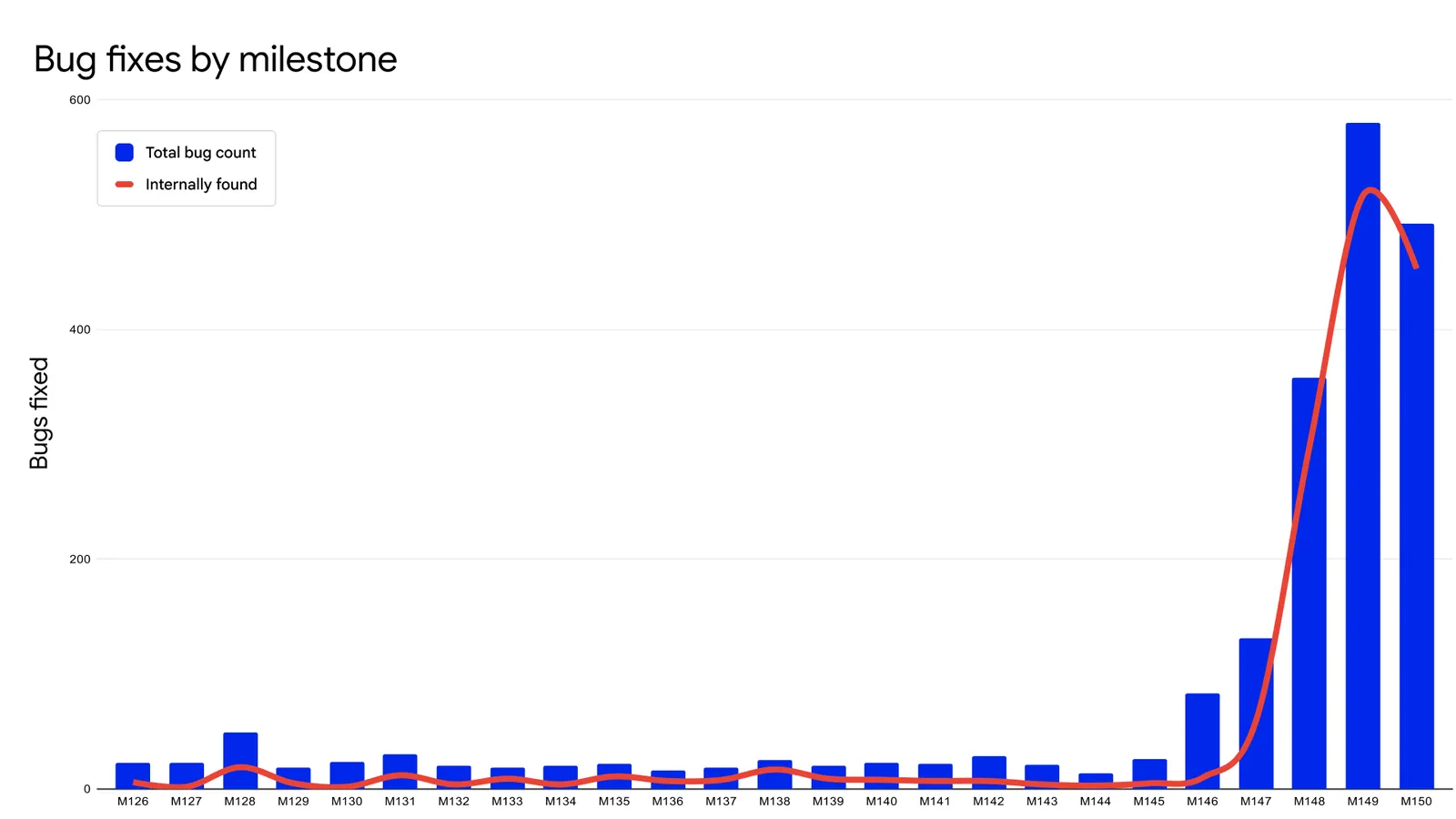
GOOGLE’S Chrome Security team has integrated artificial intelligence into its vulnerability workflow, fixing 1,072 security bugs in just two recent releases. This tally exceeds the total number of flaws addressed in the preceding 23 releases combined, according to the company’s own security bulletin.
The AI system not only spots weaknesses but also automates the triage process, generating several candidate fixes that are reviewed by different machine agents before a human signs off. This approach shrinks the window between discovery and deployment, allowing patches to be applied dynamically without requiring a full browser restart.
An AI‑driven agent harness has improved the detection rate, uncovering a critical flaw that had remained hidden for 13 years, and contributed to more than 1,800 patches issued so far this year. Google says it will move to a bi‑weekly security cadence, automate release notes and begin re‑writing risky components in memory‑safe languages to eliminate entire bug classes. The company also plans to tighten the patch gap by issuing updates that do not force a full restart.
Although the recent fixes have not been assigned individual CVE identifiers, the surge in disclosed vulnerabilities reflects the power of automated scanning rather than a sudden rise in active exploitation. No threat actor has been tied to the newly patched issues, but the effort highlights how AI can shift the defensive balance for widely deployed software.
Administrators should verify that all endpoints are running the latest Chrome build, which includes the AI‑patched fixes described in Google’s security blog. Enabling automatic updates reduces the exposure window, while reviewing the accompanying release notes helps teams understand which mitigations have been applied. For organisations that rely on Chrome for internal tools, an inventory of browser versions and a test programme for dynamic patches can prevent unexpected breakage.
Security teams might explore similar machine‑learning pipelines to prioritise their own vulnerability backlogs, borrowing Google’s model of multiple agent review. Adopting memory‑safe languages where feasible and experimenting with incremental update mechanisms can further shrink the attack surface. Staying tuned to the Chrome Security blog ensures defenders receive timely advice on upcoming patches and hardening guidance.