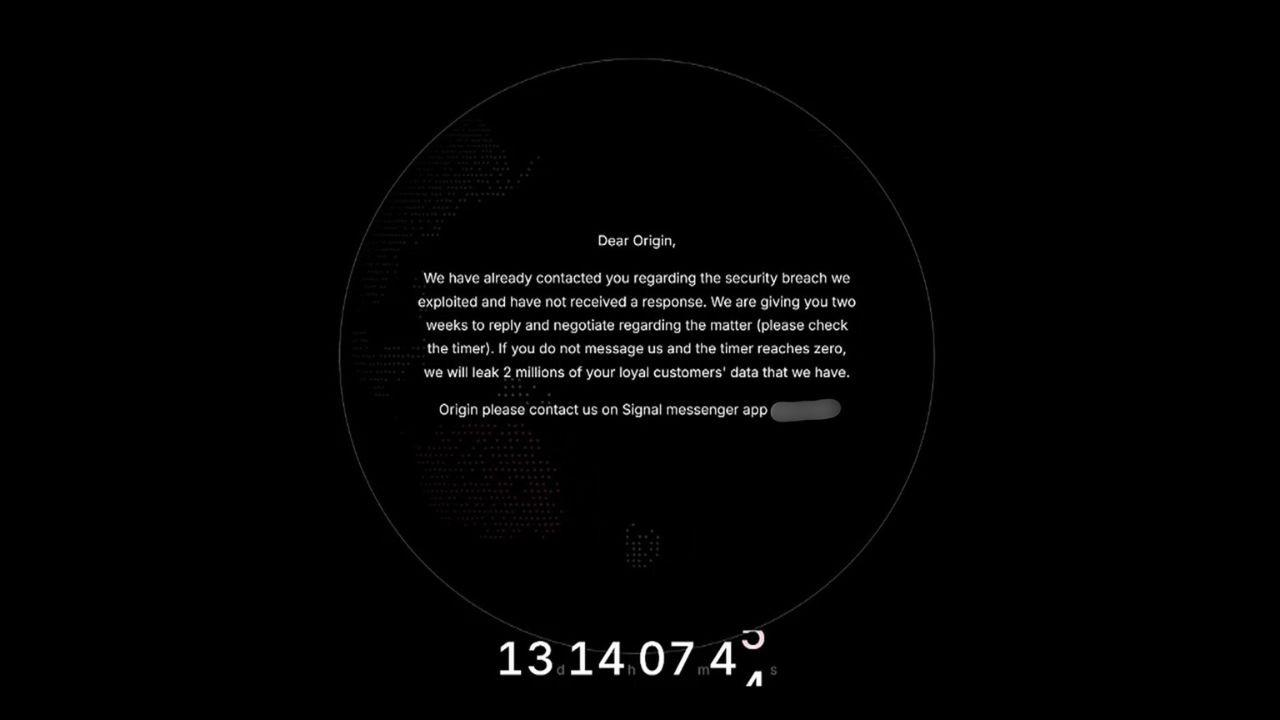
ORIGIN Energy disclosed on July 24 2026 that a cyber incident had exposed the personal details of roughly two million of its customers (according to its statement), a fact also covered by SecurityAffairs (their report). The company said an individual using the alias John Doe claimed to have gained access to its customer systems and copied names, addresses, birth dates, phone numbers and fragments of payment card data. Origin stressed that its electricity generation and retail operations continued without interruption despite the breach. The attacker has set a fourteen‑day deadline for a response, threatening to leak the information if ignored.
The breach was first spotted on July 22 2026 after internal monitoring flagged unusual activity in a customer‑facing database that stores account information. Investigators have not identified a specific software flaw or CVE associated with the intrusion, suggesting the attacker used valid credentials or exploited a misconfiguration in an exposed service. So far there is no public evidence that the stolen data has been misused for fraudulent transactions, but the potential for identity theft remains high. Origin has engaged external cybersecurity experts to assist with the investigation, containment and remediation efforts.
SecurityWeek noted that the company launched its investigation on July 22 2026 after detecting the unauthorized access (their article). The alleged hacker has threatened to publish the stolen data unless a response is received within fourteen days, a tactic that resembles extortion rather than traditional ransomware. Origin has notified both law enforcement and the Australian privacy regulator about the incident as required under the Notifiable Data Breaches scheme. Despite the pressure, the utility has stated it will not negotiate with the extortionist and will rely on legal and technical measures to protect its customers.
The incident adds to a growing trend of Australian energy and utility firms being targeted for their large stores of consumer information, highlighting the value attackers place on personal data that can be used for identity theft. Over the past year, several similar breaches have been reported at other retailers and telecoms, prompting regulators to tighten guidance on data protection.
Energy companies are now under increased scrutiny to prove they have adequate safeguards for customer records held in legacy systems. Experts recommend that firms treat customer databases as critical assets and apply the same rigor used for operational technology environments.
Organisations should review access controls on customer databases, enforce multi‑factor authentication for all privileged accounts and monitor logs for anomalous queries that could indicate credential misuse. Encrypting stored personal information and segmenting networks can limit the amount of data an intruder can harvest in a single breach, reducing the impact of any successful compromise.
Maintaining an up‑to‑date incident response plan that includes clear communication timelines helps manage ransom‑style demands and ensures timely notification to affected individuals. Regular privilege access management reviews and timely patching of internet‑facing services further reduce the likelihood of a similar event.
Customers of Origin Energy are advised to watch for unexpected communications that request personal details or direct them to unfamiliar websites, as these could be phishing attempts leveraging the breach. Checking bank statements and credit reports for signs of misuse can help detect fraud early, and any suspicious activity should be reported to the relevant financial institution immediately.
Those concerned about possible exposure may consider placing a fraud alert or credit freeze with Australian credit bureaus to restrict new accounts being opened in their name. Finally, updating passwords on any online services that share similar credentials and enabling multi‑factor authentication where available adds an extra layer of protection.